Terence Rattigan’s The Deep Blue Sea is a terrific piece. Almost the epitome of the ‘well-made play’, and with a structure that takes place in one room across one day, it affords an actress who is almost but not quite yet of a certain age a wonderful opportunity to shine. This is a role originated by Peggy Ashcroft and played in recent years past by such luminaries as Penelopes Keith and Wilton, Tamsin Greig, Helen McCrory, and Harriet Walter – if they’ve been Damed then they’ve probably done it. And it’s easy to see why – the character of Hester Collyer, living in a dingy north-west London flat in the late 1940s [ed: early 1950s], is at the centre of a triangle of concern: well-meaning neighbours who interfere a tad more than she’d like; a feckless wastrel of a lover, Freddie Page, who doesn’t want to hurt her but would rather be drinking or playing golf than showing any affection; and an abandoned High Court judge of a husband who clearly does still loves her. Freddie has the sense to realise that he and Hester are “death to each other”, but that’s about the only point in his favour. And Hester’s problem is that she cannot live without him: the play opens with Hester having attempted to gas herself, because Freddie forgot her birthday and went off to Sunningdale for the weekend to get a round or two in.
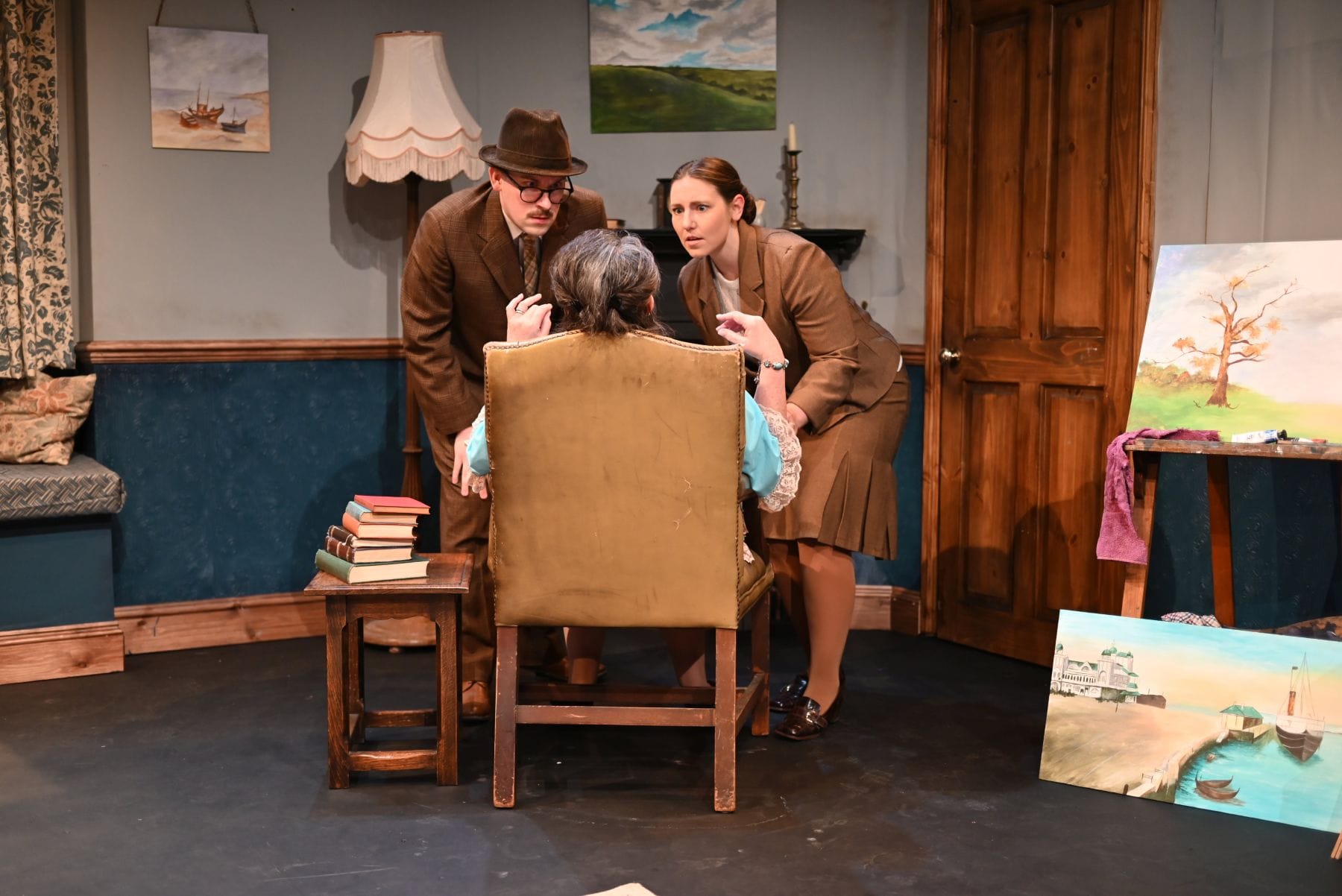
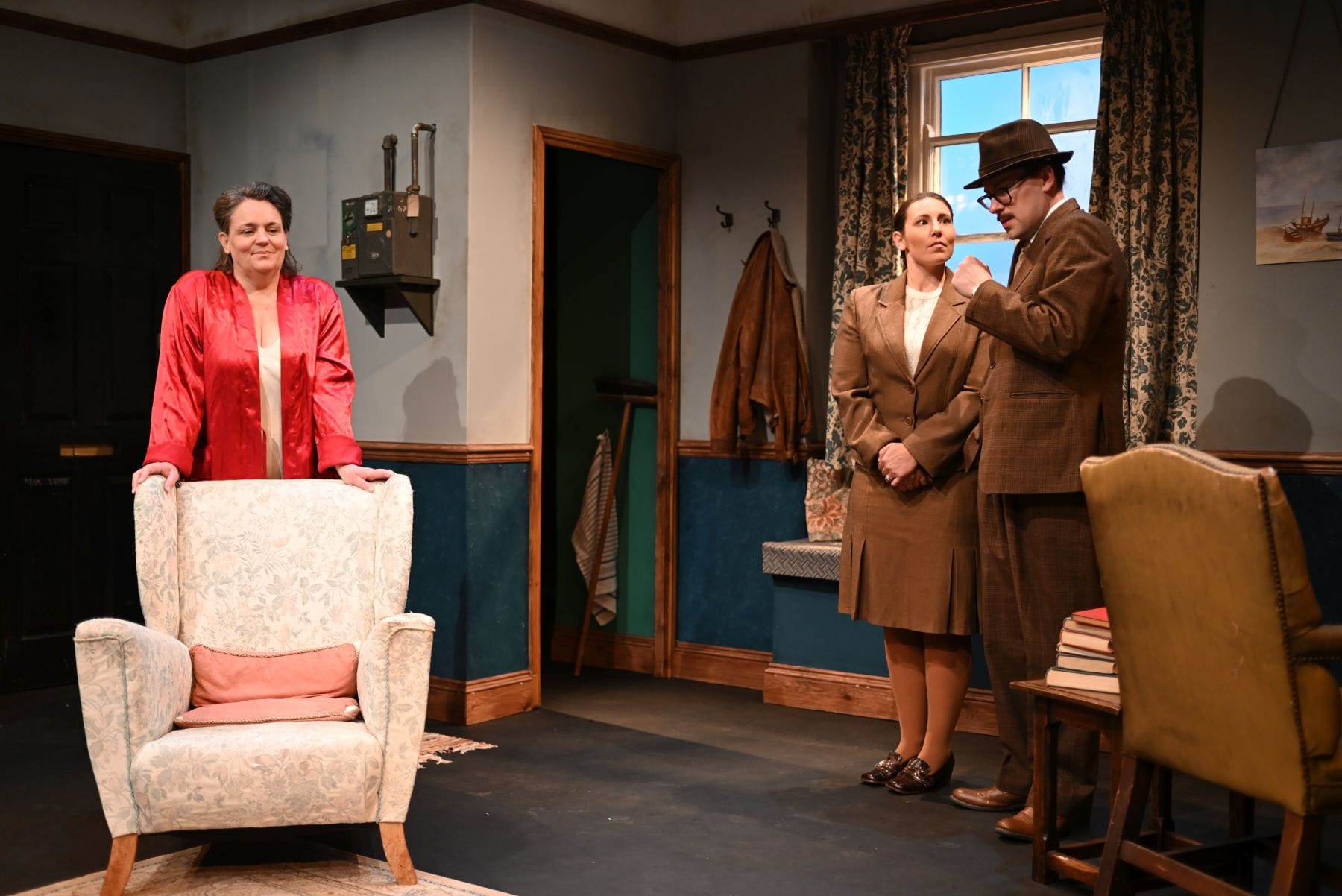
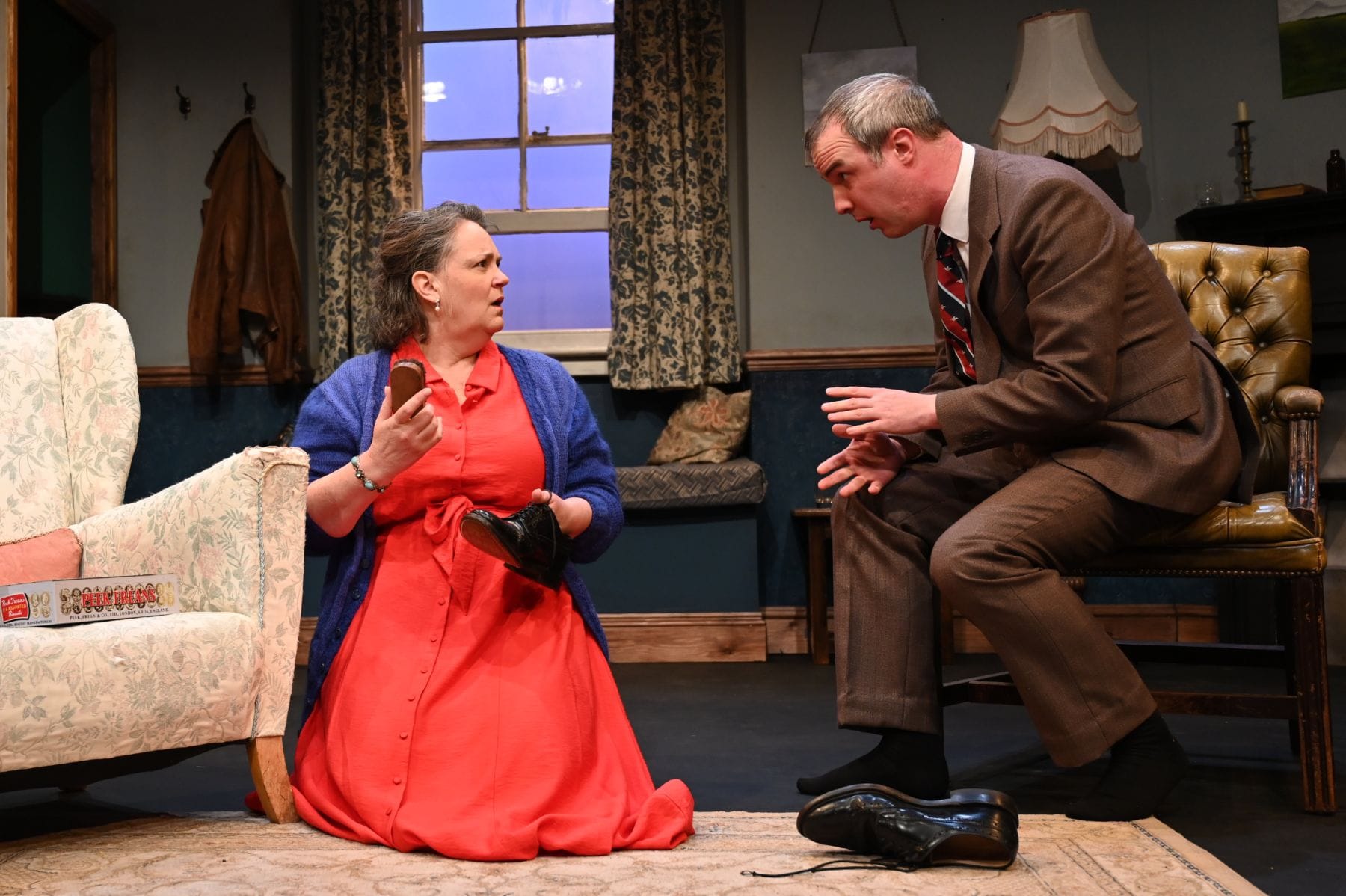
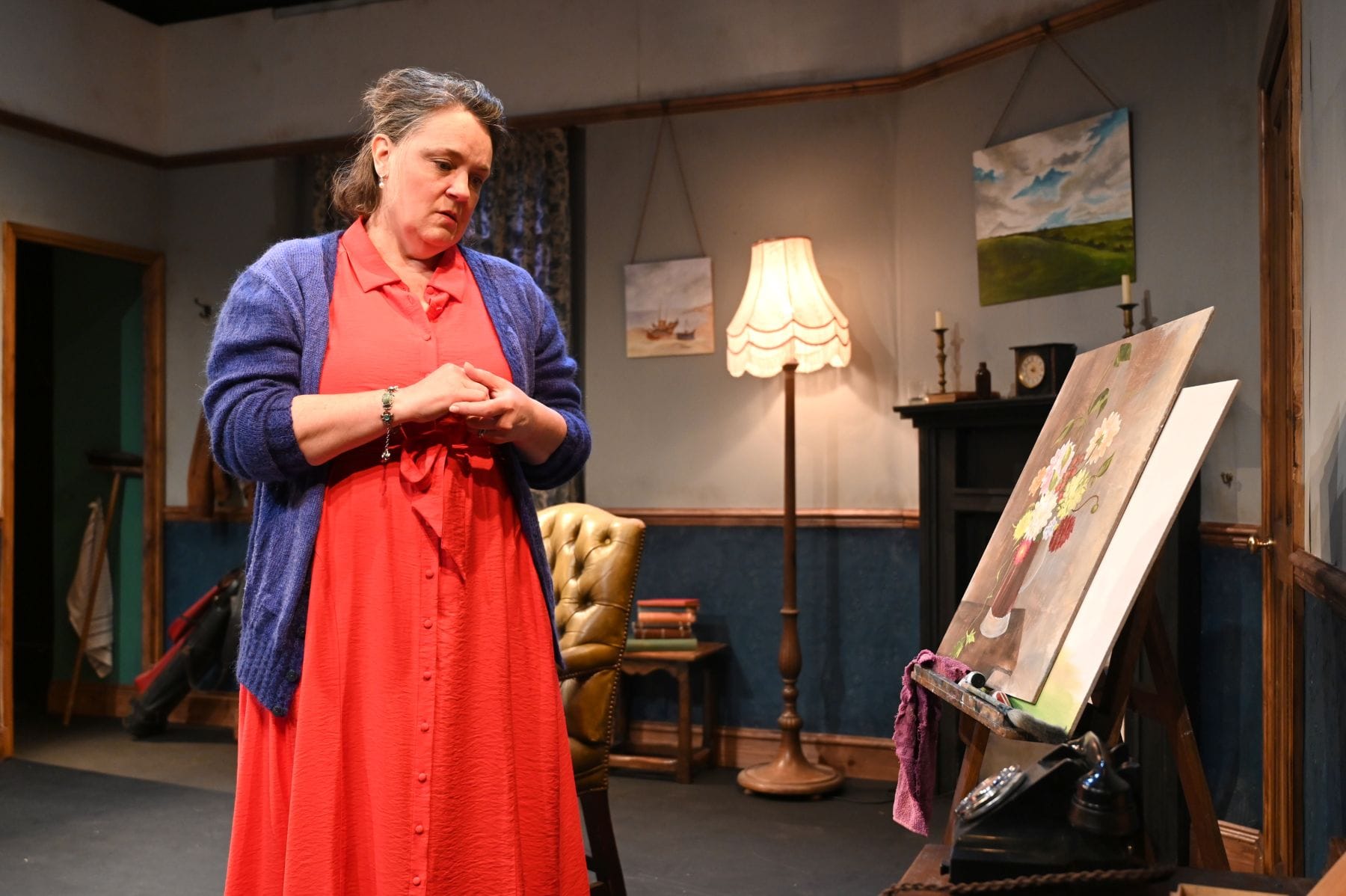
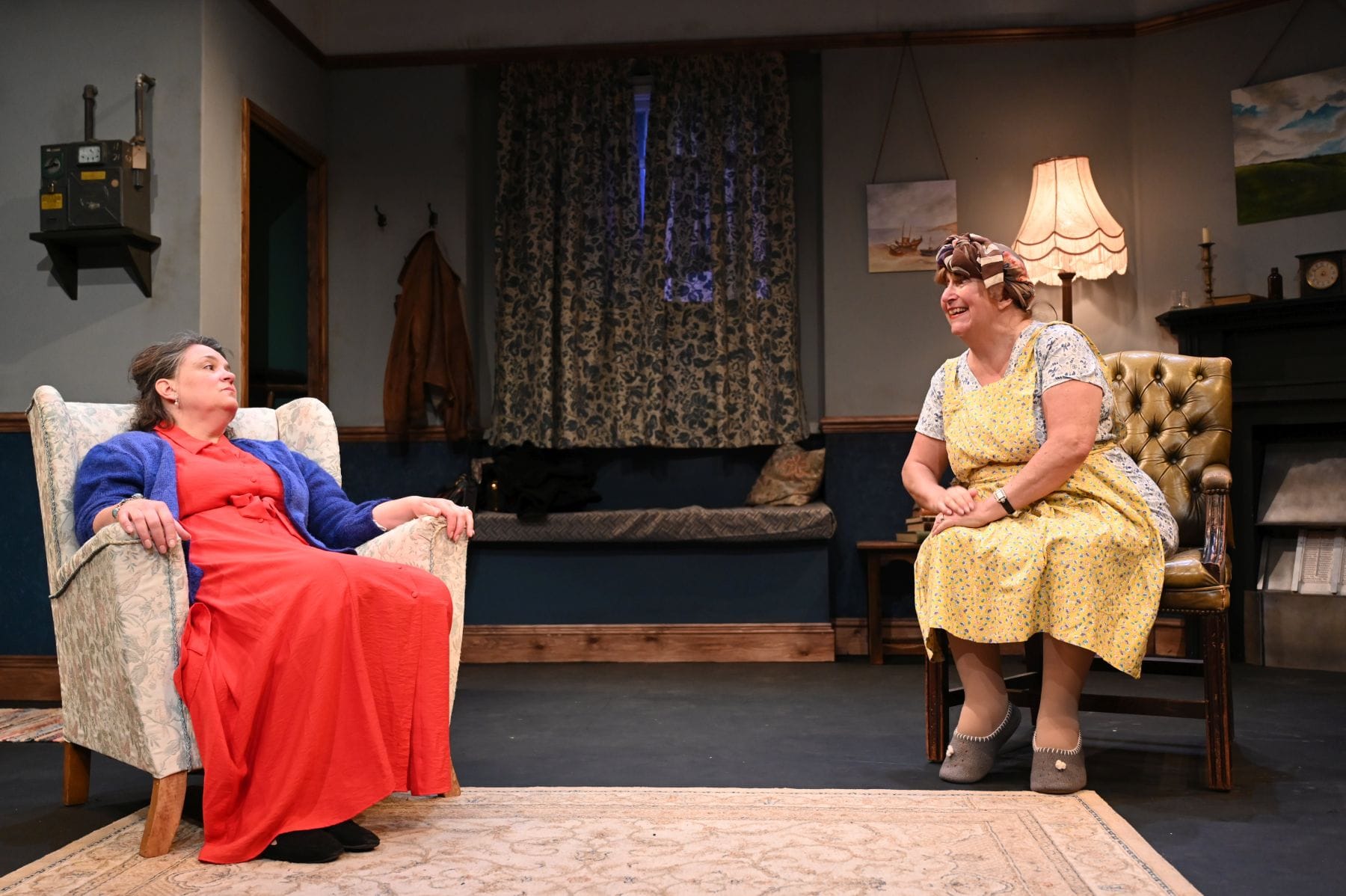
In this post-War era, in a country still finding its feet and trying to establish its new role in the world, the actions of the characters are going to be dictated as much by the period and its expectations as their own motivations – in this sense, Hester is the rebel and everyone else is picking up the pieces; one of those pieces is Hester herself. But it means that period is important, and establishing that is crucial to dramatic success. Chris Janes, as well as directing, designed a set and presented an ambience that captured the feel of the period pretty well, with unpainted woodwork, uninviting chairs, a gas fire in the corner and a gas meter on the wall. Perhaps with translucent walls we could have seen something of the stairwell outside, as a fair bit of dialogue takes place there, but I appreciate the difficulties in a performing space this size. Door handles have to be rattled vigorously at several moments, and I never felt there was any danger of set failure. Set construction teams don’t get enough credit, and this (thanks to Lucas Brace, Chris Brunton, Mike Day, Paul Day, Ian Evans, Mr Janes, Martyn Leonard, Richard Martin, and Paul Morton) was a good one.
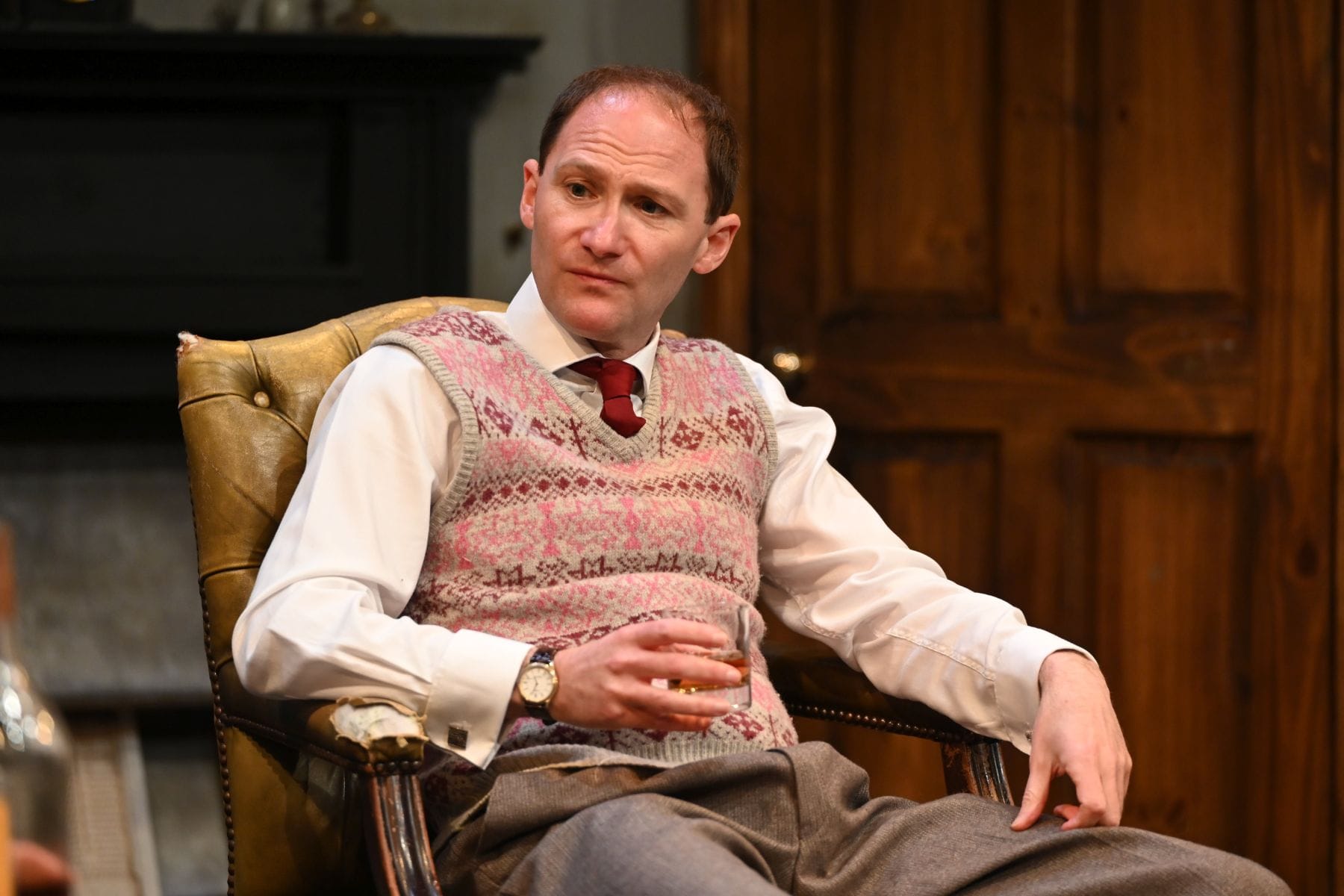
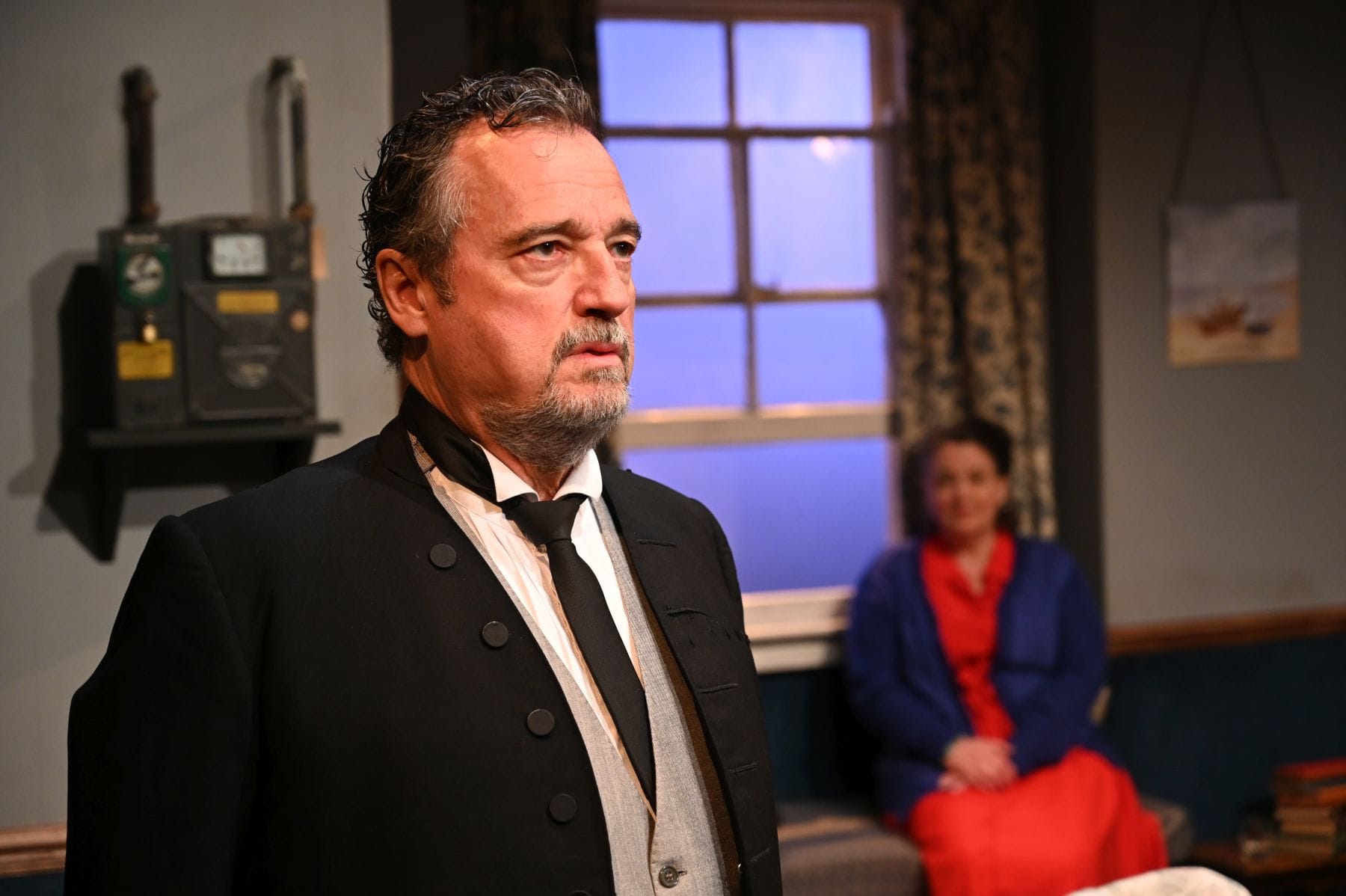
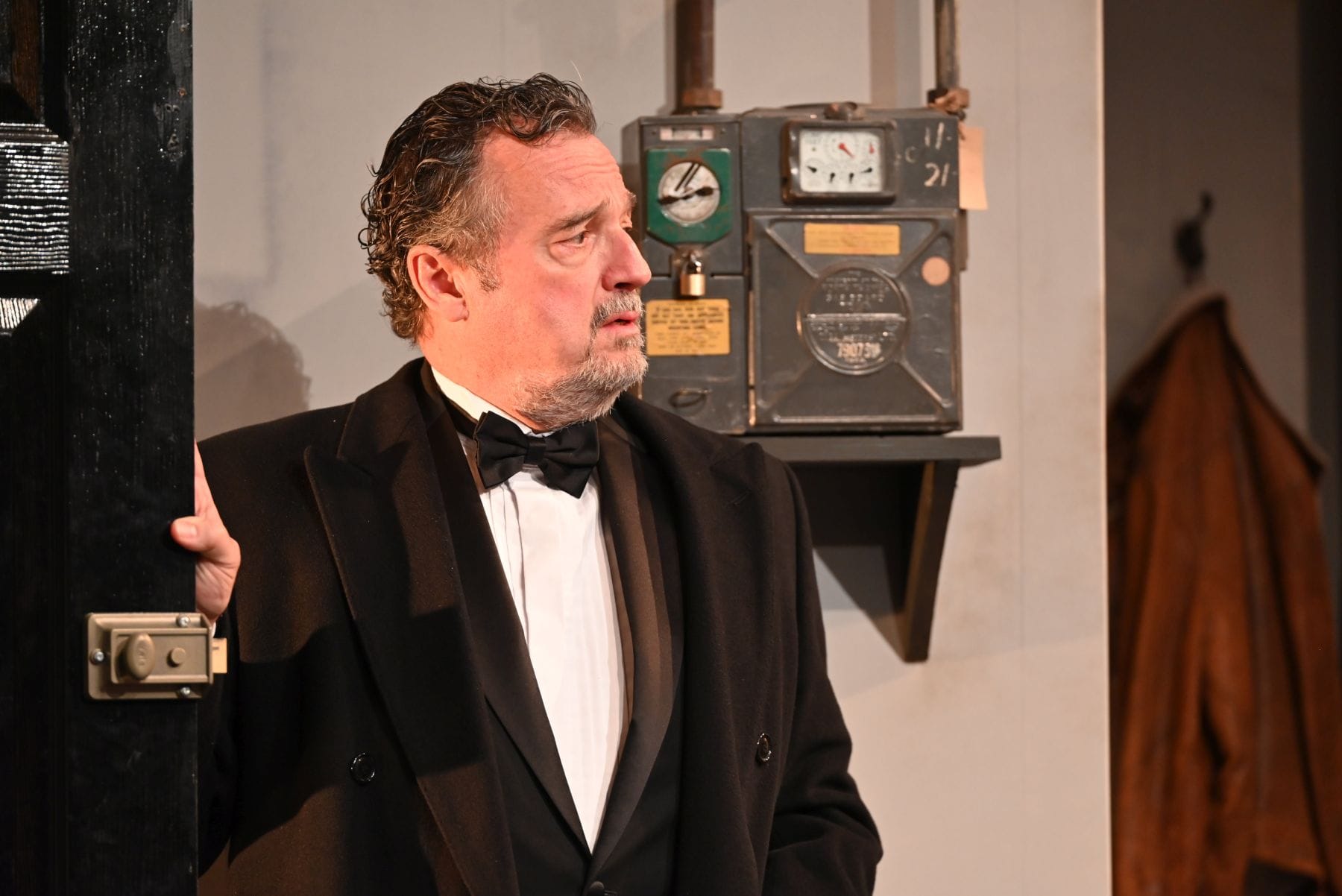
There wasn’t a great deal to be done in terms of sound, but minor points like the very particular ‘whump’ noise that a gas fire makes when it lights, or the sound of a gas meter’s timer being wound up, can make all the difference to capturing a period correctly, and these were convincing: credit to Theo Berkhout. Wardrobe was by Loretta Freeman, and was generally well done – sleeveless pullovers appropriate for Page and drinking buddy Jackson, and Sir William Collyer’s coat and collar looked spot-on for a legal profession in 1940s England that really wanted it to still be the 1840s – but I wasn’t convinced by Jackson’s knickerbockers (surely anachronistic) nor neighbour Philip Welch’s brown checked suit – if he worked at the Home Office at that time, that suit would have been black, no other colour. Props were managed by Hannah Leonard and Angela Reiss – the script doesn’t call for many, but Freddie’s brown leather golf bag looked like it was from the right period and that gas meter was a star.
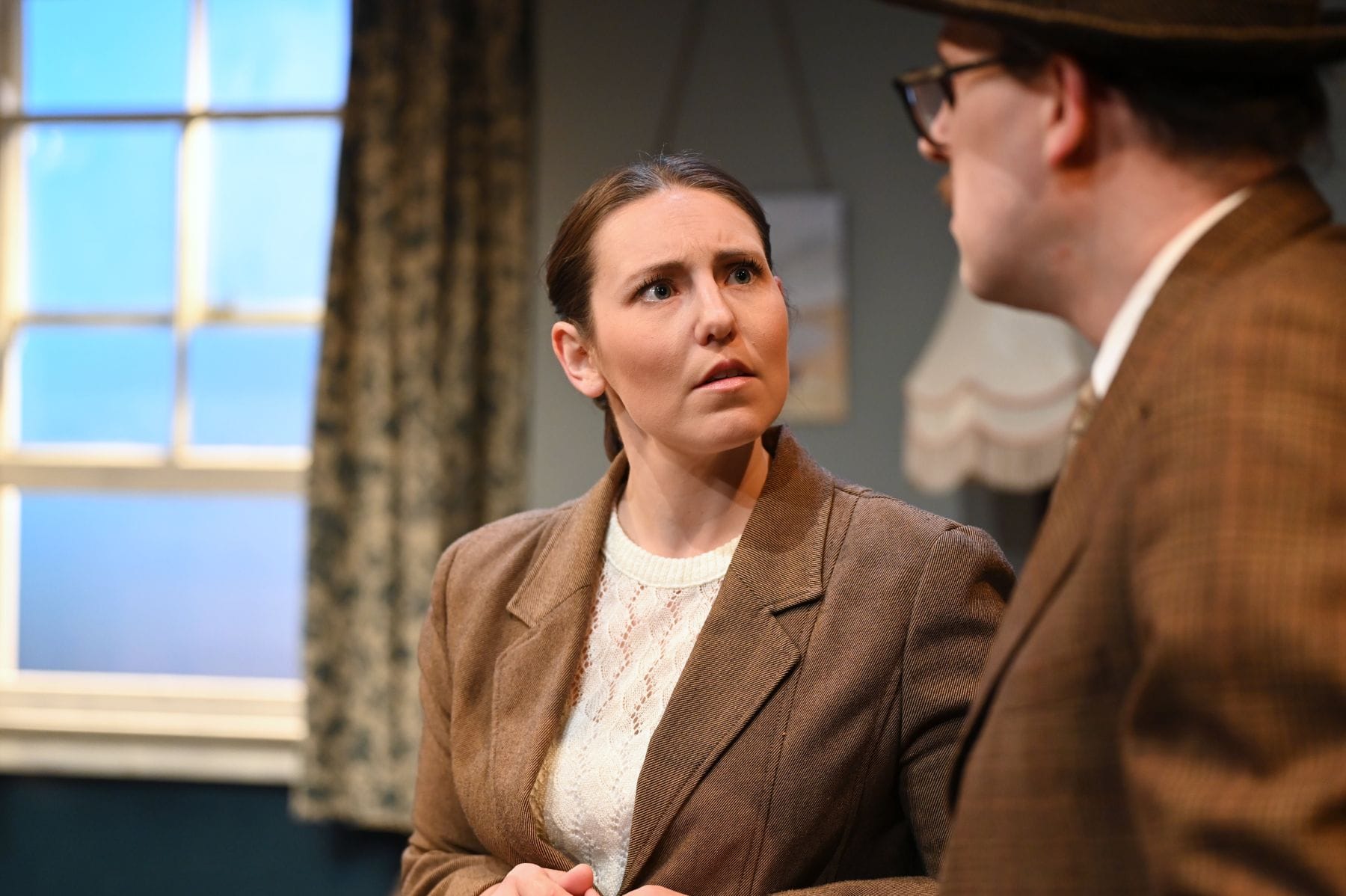
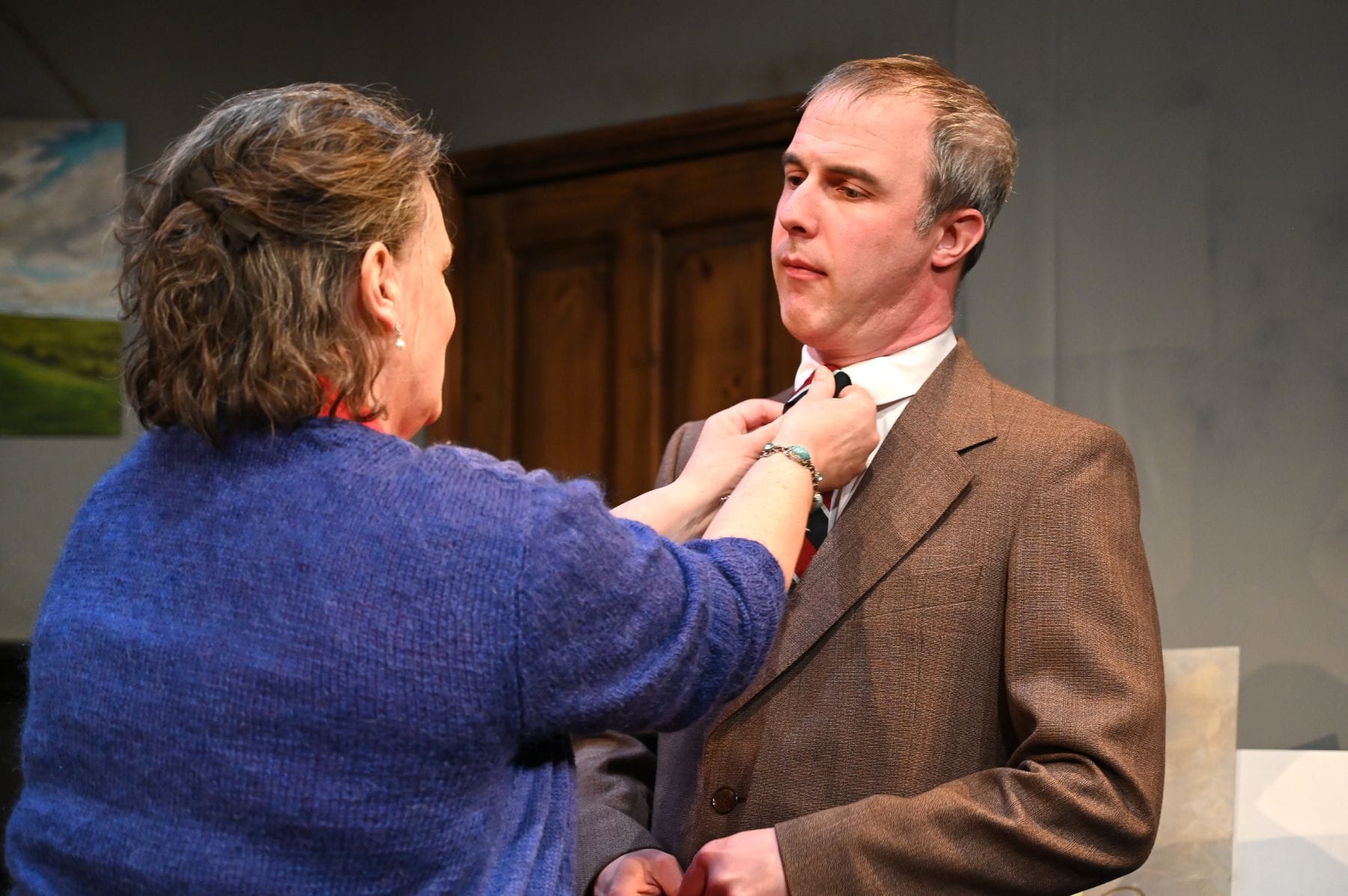
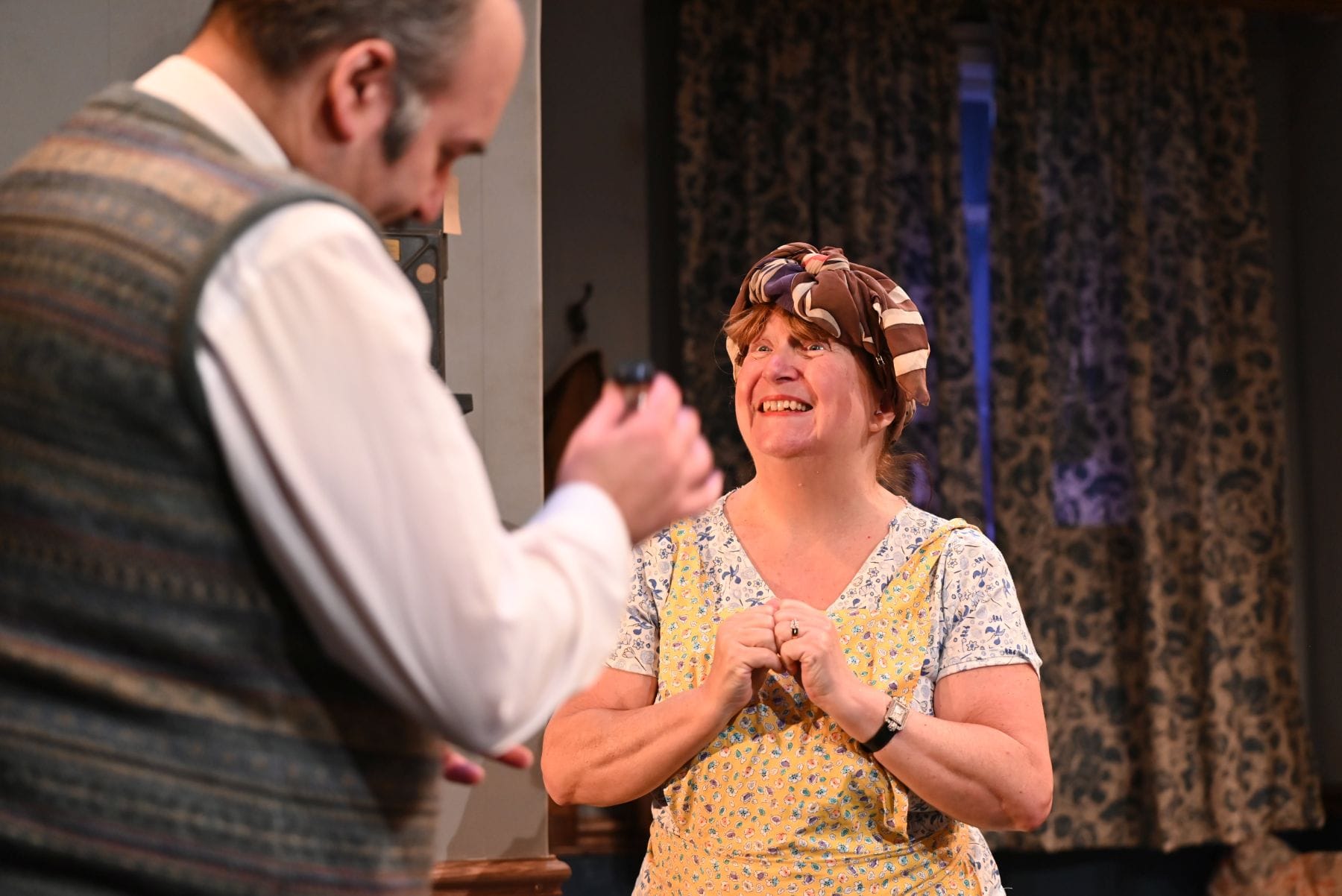
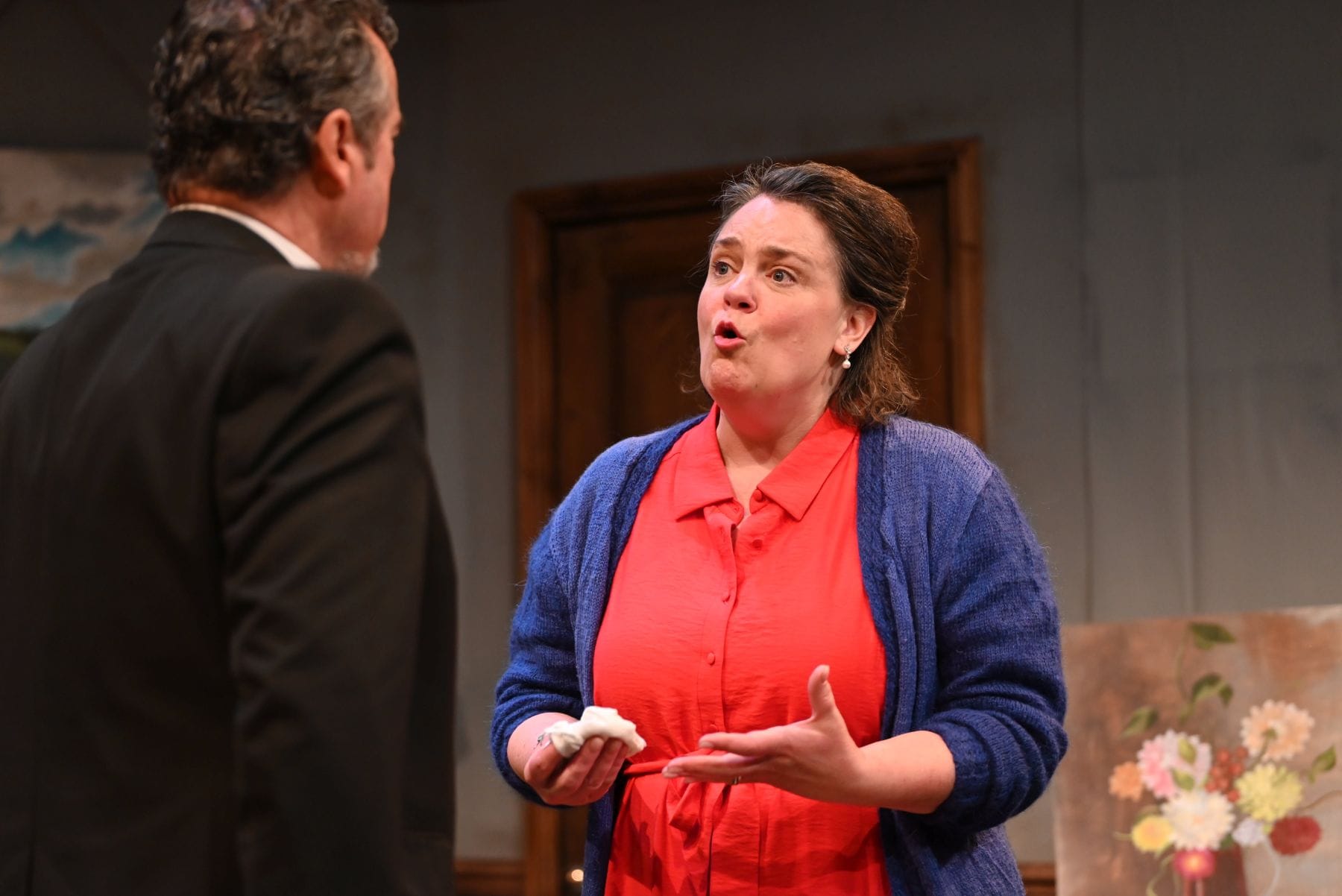
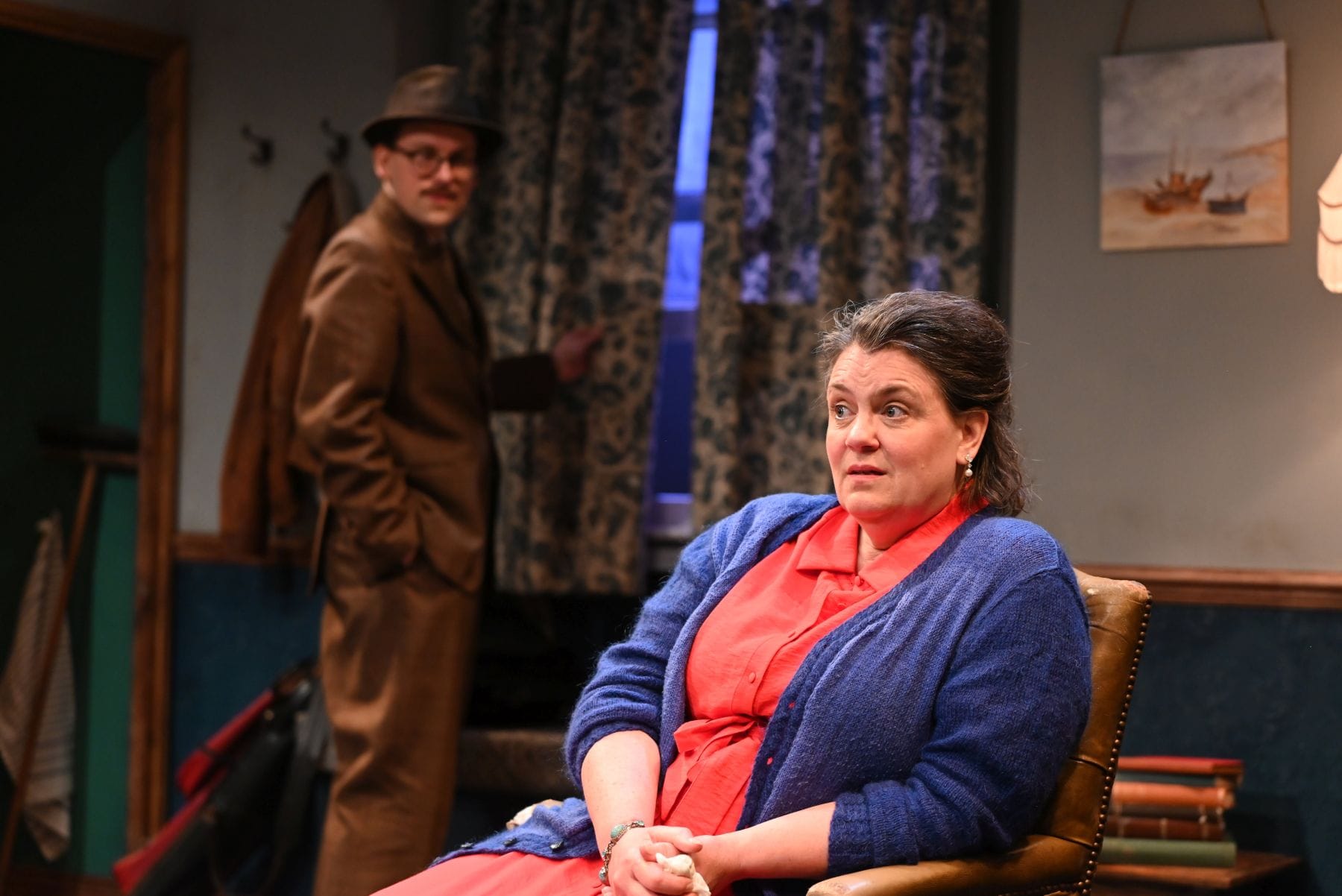
Hester, played by Julia Riley, is living – or dying – an unhappy life perched on a nest of contradictions. She may appear calm and polite, but the desperation she feels for Freddie is never far from the surface. And despite the upsets she has caused – after all, she “married the first man who asked her and fell in love with the first man who gave her the eye” – this is a woman still capable of kindness and concern, and I always felt comfortable with Ms Riley on stage. Without histrionics but nevertheless with the right degree of urgency, she presented Hester’s need for Freddie’s affection and presence, and her interactions with both Sir William and the mysterious Mr Miller from upstairs were warm and credible; those with the other neighbours had that believable mild hint of irritation. This was a very well-balanced central performance.
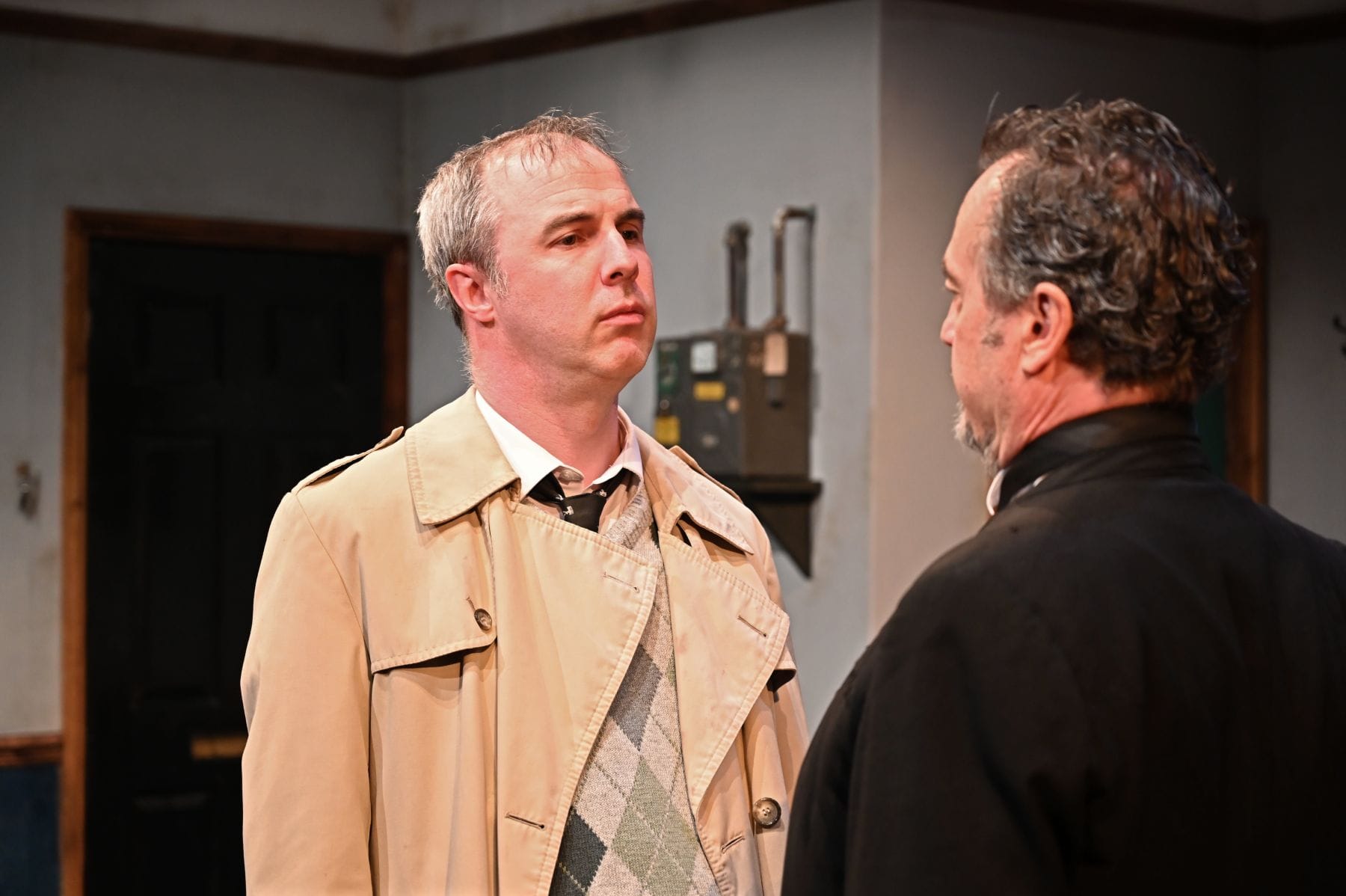
Equally good was Des Turner as Sir Willam Collyer: he gave us a husband still deeply in love with the wife who has abandoned him, believably prickly when he encounters Freddie, and clearly uncomfortable with the self-confidence possessed by Miller. Collyer could easily be played with either sphinx-like enigma, betraying nothing, or could descend into stuffy legalistic caricature, but Mr Turner wisely avoided both of these extremes. His Act III scene, realising that he will likely never see Hester again, was extremely well played. As Miller, the immigrant struck-off medical practitioner (“you mustn’t call him Doctor”) turned bookies’ clerk – an equally illegal profession in 1940s Britain – Rez Mossavat gave what was for me the stand-out performance of the evening. This was a man with experience, wisdom, clarity of mind and presentation, and yet compassion – the friendship instantly struck between him and Hester was honest and mutually affirming. As much as I love this play, I think its third act is weak – but the triumvirate of Hester, Miller, and Sir William made it gripping. With well-played characters, you just want them to be on stage more, even when the script doesn’t call for it – for me, this was the case with Mr Mossavat’s Miller.
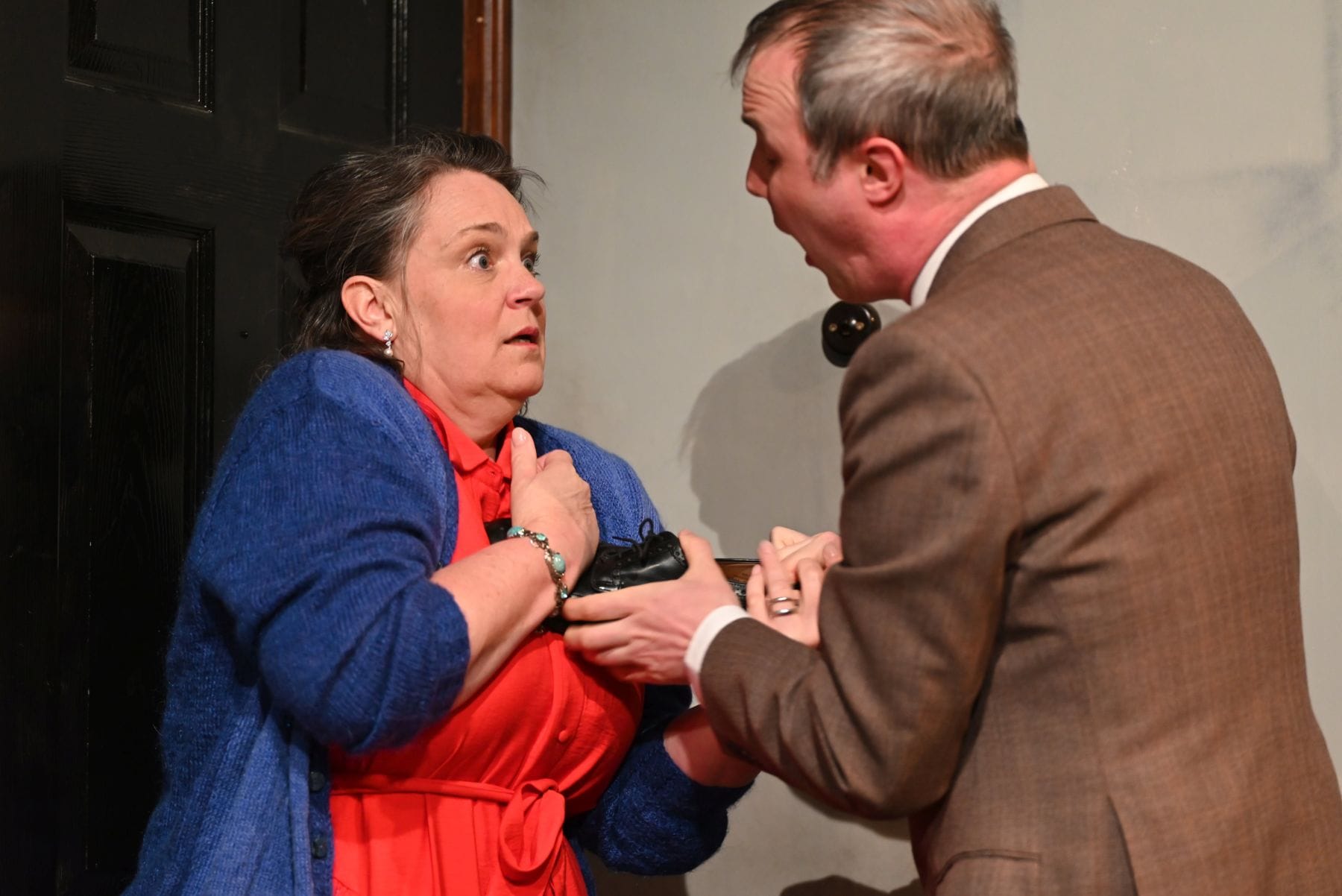
I did have one or two issues with Adam Chamberlain’s portrayal of Freddie, the multi-decorated former Spitfire ace and test pilot. The character needs boisterous energy and boyish charm, matched with occasional spite and a degree of self-loathing, and although Mr Chamberlain captured the last of these qualities, particularly the more he became trapped at the bottom of a whisky bottle, I struggled to accept that he was the 1940s equivalent of a rock star – because that is how test pilots were seen in that era. It would have been useful for him to have more colour in his hair, to emphasise his relative youthfulness compared to Hester – their age gap is a relevant factor in Hester’s predicament, and this was missing. His Act II exit, having callously provided Hester with a shilling so that she could have another go at ending it all, should be savage and shocking, and we got some of the way there, but it needed more bite.
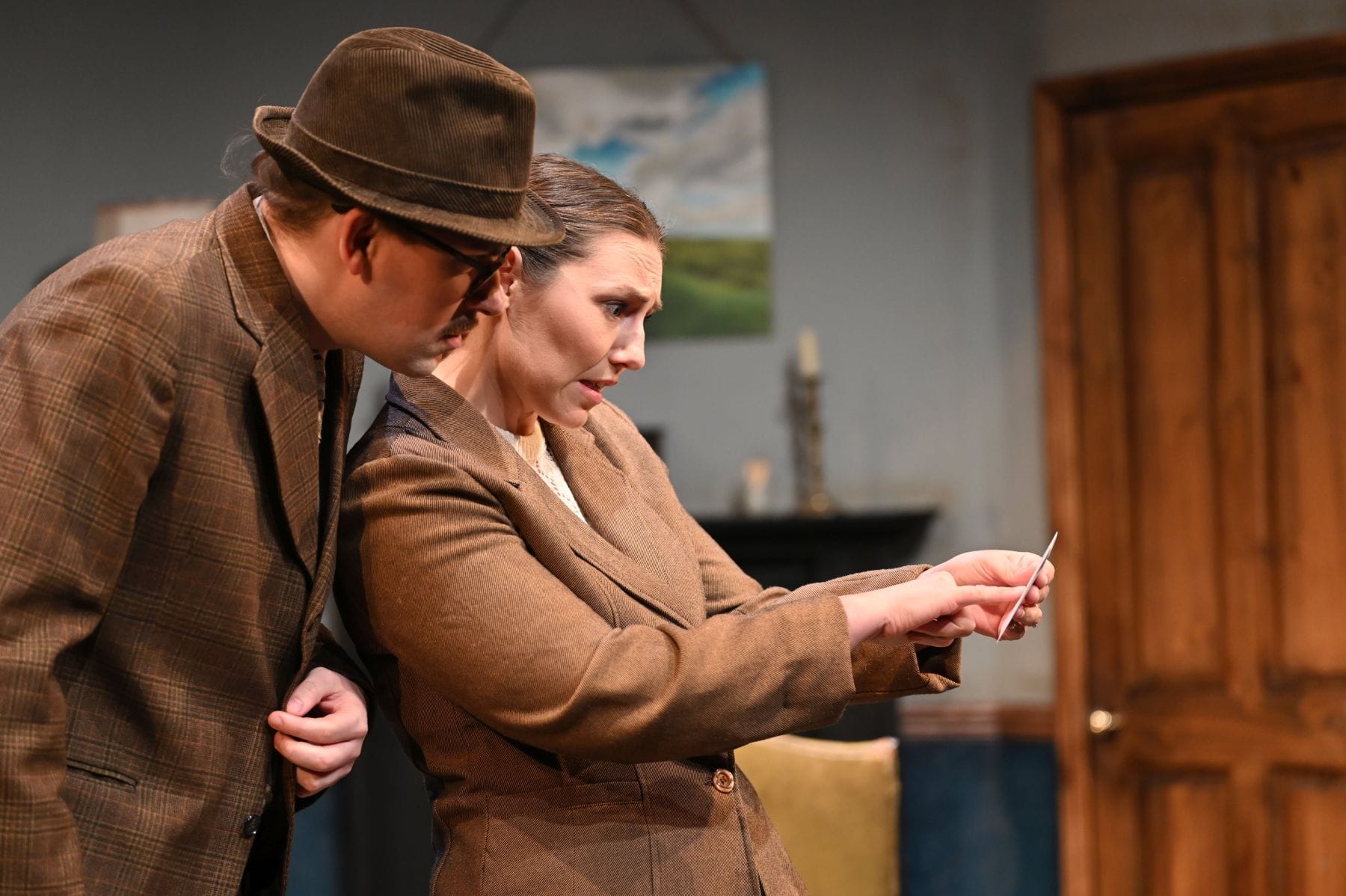
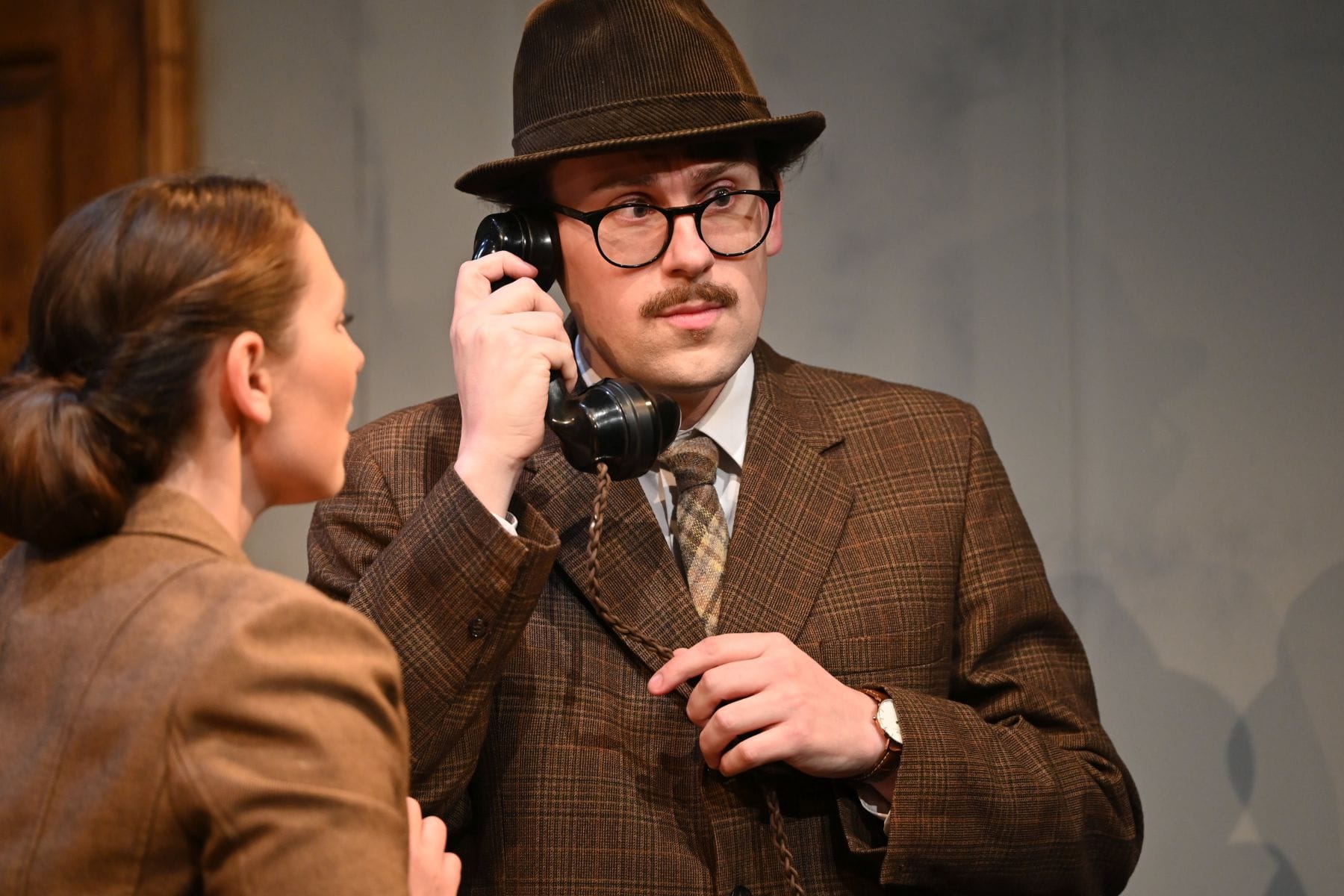
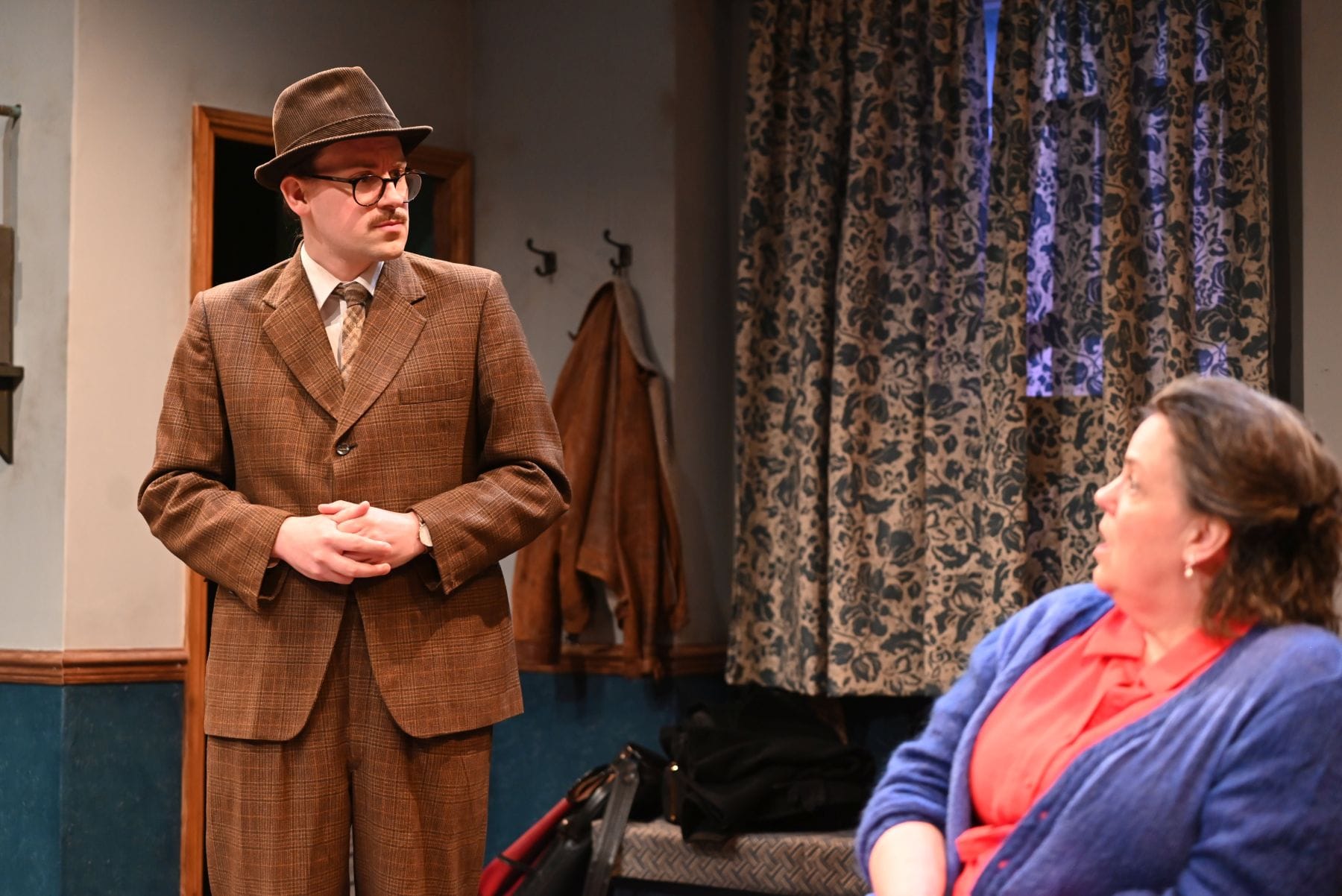
Neighbours Philip and Ann Welch were played by Cameron Marklew and Ashleigh Bassett. Ms Bassett did well as Ann, capturing the wife who is struggling to break free of her own timidity, and her short scene with Hester in the latter stages of the drama was good. I was a little bewildered by Mr Marklew’s Philip: this is a character reeking of absurd self-importance, who believes himself to be a senior civil servant in the making, blithely taking a few minutes on a Monday morning to save a life and demonstrate calm authority in a delicate situation – but Mr Marklew looked like he really didn’t want to be there, and I was inwardly screaming for him to take his hands out of his pockets, stop looking so shifty, and above all not commit the capital offence of continuing to wear his hat indoors in the presence of a lady. The actor may have had personal reasons for this, but for period and dramatic authenticity it was unforgiveable. I was prepared to let it go if it had just been for a minute or two, but Welch’s involvement in the opening scenes is substantial.
The neighbourhood watch was completed by Trish Galloway as Mrs Elton, landlady/caretaker of the property, who is concerned to avoid police involvement and potential scandal, but nevertheless is sufficiently friendly towards Hester and knows her secret. This is another part which could so easily descend into caricature, but Ms Galloway avoided it well and gave a good performance in a comparatively small role. Finally we had Alex Brace as Jackie Jackson, Freddie’s drinking partner and, we are given to understand, another former (albeit less successful) pilot. Jackson exists as almost a comic foil to Freddie, certainly as a sounding board, and Mr Brace was competent.
Overall, this was a strong production. The period was generally captured very well, the pacing was snappy, and although I have mentioned a couple of characterisation issues, the cast were competent and the three leads excellent. I am delighted to see Rattigan being performed more often, and The Company of Players has presented several of his plays in recent seasons, all to the good. Thank you for the invitation and congratulations to Mr Janes and his crew on the production.